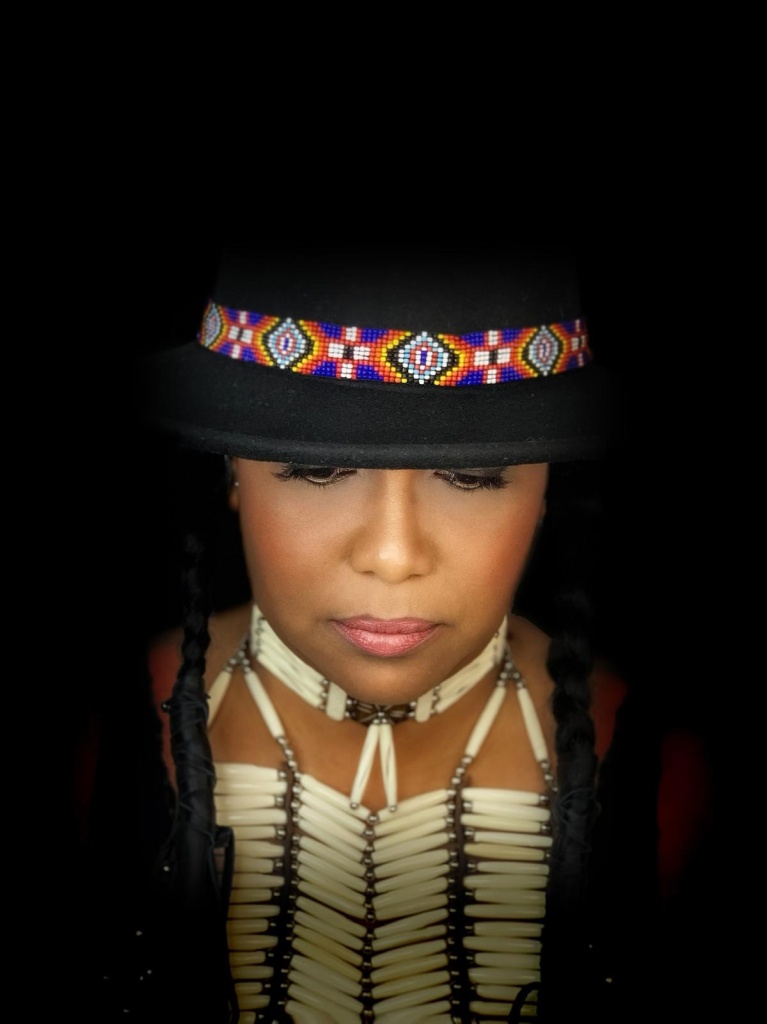
Kiowa Jan
Kiowa Jan Art Collection
My work is rooted in storytelling, identity, resilience, and hope. As a member of the Kiowa Tribe of Oklahoma, I use digital paintings, drawings, comics, and animation to explore personal experience alongside Indigenous history, culture, and visual language. I spoke about these intersections in my TEDxSwansea talk, Global Footprint of Indigenous Peoples in Contemporary Media, currently featured on TED.com.
Each piece is hand drawn and painted on a digital canvas using digital ink, paint, and brushes. This process combines the personal, hand-drawn feel of traditional art with the creative possibilities of digital tools.
My art explores both hardship and hope. In the Pain to Power series, I draw on my twin sister’s and my experiences as survivors of child sex trafficking. Through the visual language of ledger art, I tell stories of captivity, survival, and healing. Symbols such as Kiowa scalp paint and the broken arrow carry cultural meaning while reflecting the lasting impact of trauma and the strength required to move forward.
Ledger art refers to nineteenth-century Plains Indian drawings created on pages of ledger or account books. Often made by warriors, these works recorded personal histories of battle, honor, and daily life, blending visual storytelling with oral tradition. Some of the most well-known examples were created by imprisoned Cheyenne, Kiowa, and other Plains men at Fort Marion from 1875 to 1878, documenting both their past lives and their experiences in captivity.
I chose this medium to reflect my own time in captivity and the healing that followed decades later. I am winning.
Other works draw from the teachings of the Medicine Wheel, faith, and the natural world. Indigenous Planet follows the seasons of my life, connecting contemporary themes with Indigenous narratives.
In the Canyon is my reinterpretation of Camille Corot’s Hagar in the Wilderness. Hagar’s story unfolds in Genesis 16 and 21: first when she flees Sarai, and later when she is cast out with her son, Ishmael. In both moments of despair, God meets her, providing water, comfort, and presence. It is here that Hagar names Him El Roi, “the God who sees me.”
This work reflects on perseverance, integrity, and finding solace in hardship. It speaks to the journey of a single parent raising a son into manhood, sustained by faith when little else remains.
Through #notinvisible, I bring attention to the MMIWGT2S crisis and the violence affecting Indigenous women, girls, transgender, and Two-Spirit people. Across every series, my work is an act of remembrance, truth-telling, and healing: creating room for grief, strength, freedom, and hope.